
In the modern rehabilitation landscape, the fit of a prosthetic socket is the single most critical factor determining a patient’s mobility and comfort. As Digital Computer-Aided Design and Manufacturing (CAD/CAM) becomes the industry standard, traditional plaster casting is rapidly giving way to high-precision CNC routing solutions.
This article explores the technical advantages of CNC technology in prosthetic manufacturing and why it is the ultimate tool for clinics looking to scale production while improving patient outcomes.
1. Traditional Plaster Casting vs. CNC Digital Fabrication
For decades, the P&O industry relied on manual plaster wrap casting, creating a positive model by hand. This process is time-consuming, messy, and highly subjective, relying heavily on the individual skill of the technician.
The shift to CNC routing offers three transformative benefits:
-
Sub-millimeter Accuracy: By using 3D scanning data, a CNC router can carve a positive mold with a tolerance of less than $0.5mm$, ensuring a “first-time fit.”
-
Digital Traceability: Every patient model is stored as a digital file. If a socket needs adjustment or replacement, the clinician can tweak the digital record rather than starting from scratch.
-
Clean Workspace: CNC systems equipped with specialized vacuum shrouds drastically reduce dust, creating a safer and more professional clinical environment.
2. Technical Requirements for a P&O-Specific CNC Router
Not all CNC machines are built for the medical sector. To produce high-quality prosthetic molds (positive models), the equipment must meet specific criteria:
The Necessity of the 4th Axis (Rotary Axis)
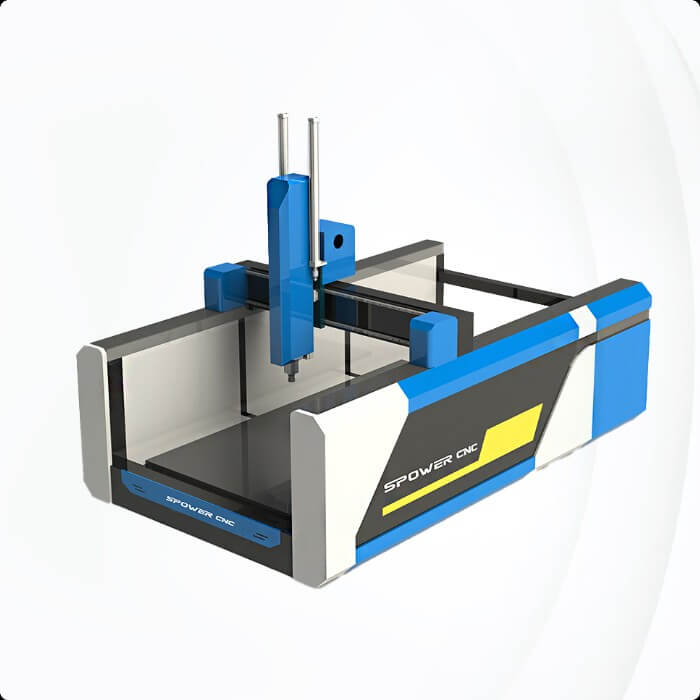
Prosthetic sockets are defined by complex, non-linear geometries. A standard 3-axis machine cannot reach the undercuts and curvatures required for a residual limb model. A 4-axis rotary CNC allows the workpiece to rotate 360 degrees, enabling the carving tool to replicate the exact anatomical contours of the patient.
High-Speed Spindles for Soft Materials
Prosthetic molds are typically carved from High-Density Polyurethane (PU) Foam or EVA blocks. A high-speed spindle (optimized at 18,000 to 24,000 RPM) is essential to achieve a smooth surface finish. This minimizes manual sanding and ensures the thermoplastic vacuum-forming process is seamless.
Seamless CAD/CAM Integration
A professional P&O CNC must be “software agnostic.” It should effortlessly process G-code from industry-leading software such as Vorum, Rodin4D, or Canfit. This ensures a closed-loop workflow from the initial 3D scan to the final carved model.
3. Accelerating the Clinical Workflow
In a competitive healthcare market, delivery speed is a core differentiator.
-
3D Scanning (5 Mins): Rapidly capture the geometry of the residual limb.
-
Digital Modification (15-30 Mins): Apply pressure relief and load-bearing adjustments in the software.
-
Automated CNC Carving (20-40 Mins): The machine carves the foam model with absolute precision.
-
Thermoforming: The final socket is vacuum-formed over the CNC-carved model.
Compared to the 24-48 hour turnaround of traditional methods, the digital workflow allows for same-day fitting, significantly increasing patient satisfaction.
4. Conclusion: The ROI of Digital Investing
Investing in a CNC router is more than a technical upgrade for a prosthetic clinic; it is a strategic business move. It reduces reliance on scarce manual labor, standardizes product quality, and allows clinicians to focus more on patient care and less on carving plaster.
For clinics aiming to lead in the 2026 rehabilitation market, a high-precision, rotary-enabled CNC router is the cornerstone of a modern digital laboratory.